I WASN’T LOOKING FOR A PROPHECY. I WAS LOOKING FOR MEANING – Meeting a Higher Priest – Pedanda, Ngewacakan, purification and seeing yourself through the lens of Balinese tradition.
Sometimes we travel the world to see new places.
And sometimes…
we travel to see ourselves differently.
Some experiences end the moment we leave.
And some stay with us long after.
My recent experience in Bali was one of those.
I traveled to Bebanden, a small Balinese village, to meet a Higher Priest and experience a traditional Balinese reading together with a purification ceremony.
There was something incredibly simple about it.
And yet…
deeply meaningful.
A reading.
Purification.
Ngewacakan.
The Balinese calendar.
Lontar.
Conversation.
And above all…
a moment to stop.
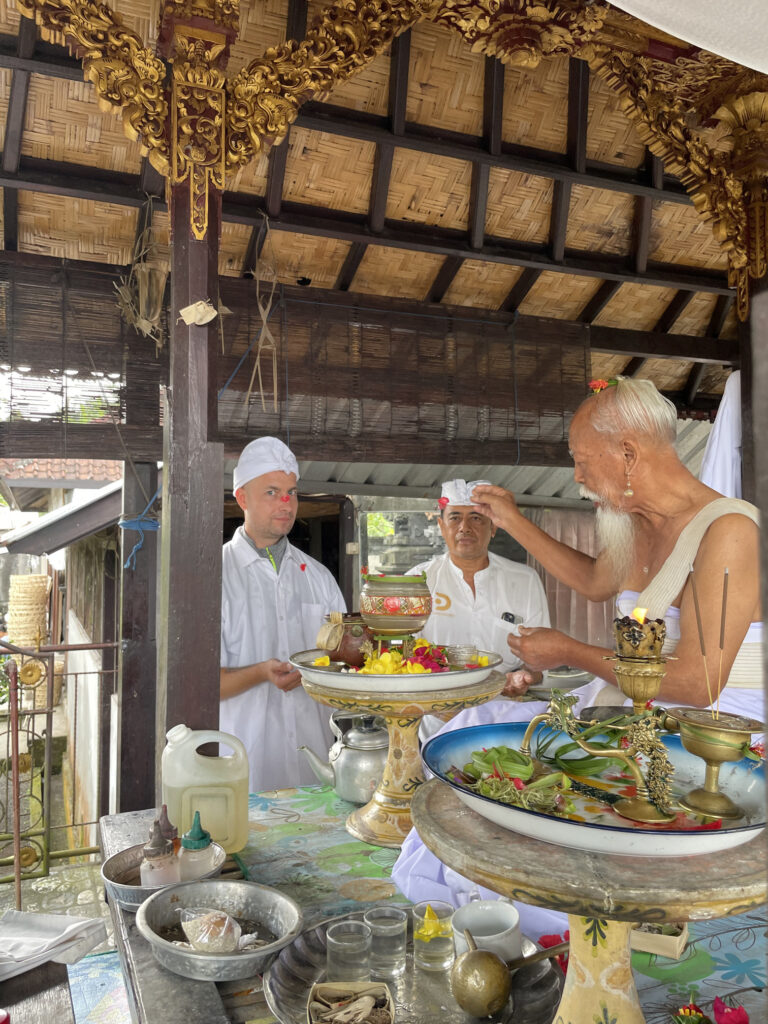
Before We Talk About Me — What Is Ngewacakan?
Bali is a place where time, nature, spirituality and everyday life are deeply connected.
Within the Pawukon tradition, a person’s birth date is not simply a piece of information on a calendar.
It can become part of a larger symbolic story.
In my case, the document begins with:
November 26, 1980, 7:10 PM, Włocławek, Poland.
Within the Pawukon tradition, my birth was identified as Buda Umanis, Wuku Kulantir.
And this is where Ngewacakan begins.
I didn’t experience it as fortune-telling.
It wasn’t about someone telling me:
“Next year this exact thing will happen.”
Instead, the document describes Ngewacakan as a kind of spiritual mirror — a way of looking at character, life direction, spiritual tendencies, and a person’s relationship with nature, ancestors and spiritual forces.
And that idea interested me deeply.
Because maybe we don’t always need someone to tell us…
what will happen tomorrow.
Maybe sometimes we need someone to help us see…
what has already happened inside us.
Pawukon — A Person Written Into Time
One of the things I found fascinating was the way Balinese tradition looks at the day a person is born.
It isn’t simply a date.
It is a combination of elements within the Balinese calendar that creates a symbolic portrait.
In my reading, these included:
Rabu — Wednesday,
Umanis,
and
Wuku Kulantir.
According to the interpretation I received, Rabu is associated with observation, analysis and a need to understand the world.
Umanis brings gentleness, openness and a search for harmony.
Kulantir adds a sense of responsibility toward surrounding life and a connection with nature.
Can any of this be scientifically proven?
No.
And that’s exactly why I prefer to approach it differently.
As a language of symbols.
As a way of asking questions.
Because sometimes a symbol doesn’t need to be scientifically proven to make us reflect.
My Meeting With the Higher Priest – Pedanda
I didn’t travel to Bebanden simply to experience another tourist attraction.
I didn’t want to tick another box.
I wanted to genuinely experience it.
Everything took place there.
There was the reading.
The purification ceremony.
The Ngewacakan.
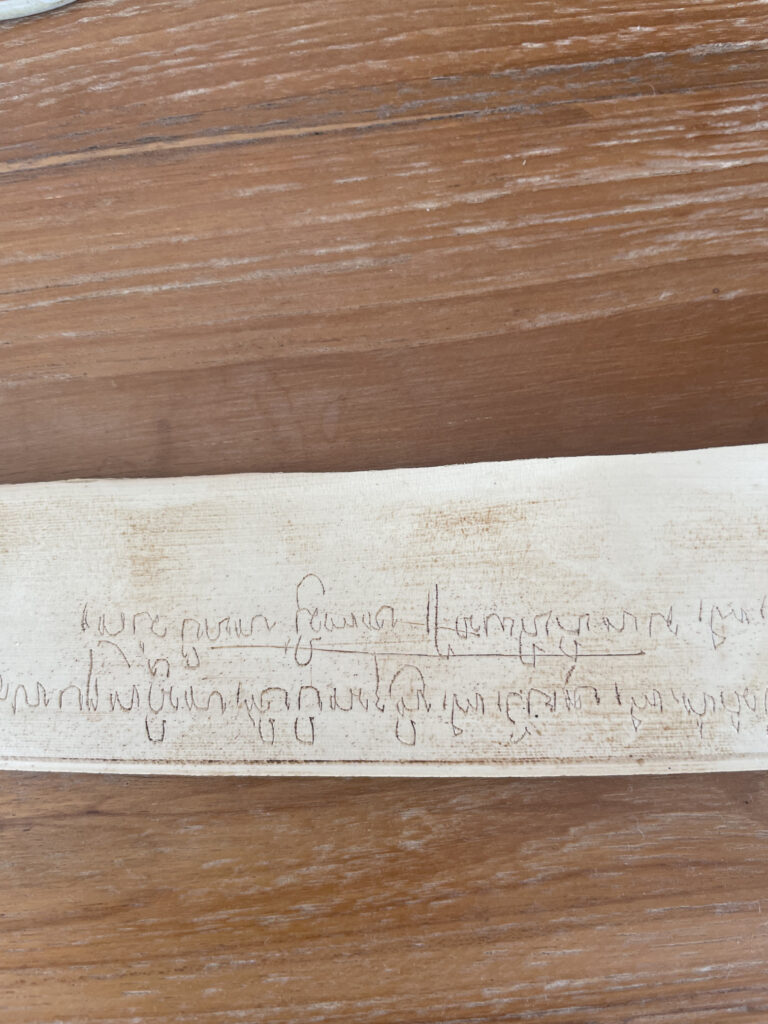
The Balinese calendar and information connected with the Lontar tradition.
And there was time simply to listen.
That was the most important part for me.
Not spectacle.
Not creating another “wow” photograph.
But atmosphere.
Focus.
A tradition carried by people who live with it every day.
And the awareness that, for a moment, I was entering a world that wasn’t my own.
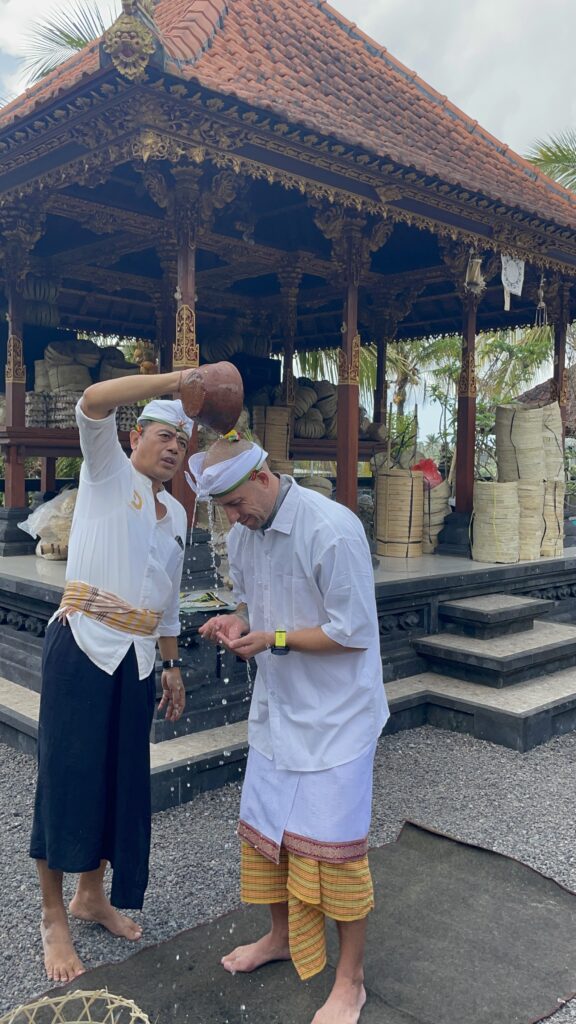
Purification — Cleansing
The purification ceremony was a particularly meaningful part of the experience.
I don’t want to describe it simply as a ritual for “removing bad energy,” because that would be too superficial.
For me, what mattered more was what such a ritual can represent psychologically and symbolically.
You stop.
You put your phone away.
You stop rushing.
For a moment, you aren’t an employee.
You aren’t a manager.
You aren’t a traveler.
You aren’t a son, partner, friend or any of the other roles you carry every day.
You are simply…
a human being.
And someone tells you:
stop.
Look at yourself.
Think about what you are carrying.
What you want to leave behind.
What you want to take forward.
Maybe this is why ceremonies like this can be meaningful.
Not because they magically solve our problems.
But because they create a moment in which we can consciously begin again.
Ngewacakan — When Tradition Becomes a Mirror
The most interesting part came next.
Ngewacakan.
I received a detailed document about my reading.
And I have to admit…
there were many places where I stopped and thought.
Not because I take everything literally.
Quite the opposite.
The document itself makes clear that these traditional and astrological interpretations should not be treated as a scientific personality diagnosis.
But when you read certain things about yourself…
you start asking questions.
“A Person Who Searches for Meaning”
That sentence appeared at the very beginning of my reading.
“A portrait of a person who searches for meaning.”
And I think that was the phrase that stayed with me the most.
Because according to the interpretation, simply experiencing something isn’t always enough for me.
I want to know:
why?
What does it mean?
What is underneath the surface?
What story is behind the person?
What story is behind the place?
What does the ritual mean?
The document describes this need to go deeper — not simply to know, but to understand.
And when I read that, I thought:
Yes.
Maybe that’s why I’m so interested in people.
Not just places.
Not just photographs.
Not just travel.
But stories.
I Don’t Just Travel Through Places
One sentence from the document particularly stayed with me:
“You travel through people.”
And the more I think about it…
the more it makes sense.
Of course I travel through the world.
Bali.
Vietnam.
Cambodia.
Other places.
Other cultures.
But increasingly, I notice that the place is only the beginning.
What interests me most is the person I meet there.
Their story.
Their way of life.
Their perspective.
What I can learn from them.
Because a place can be photographed.
A person has to be understood.
Pertiwi — Mother Earth
One of the strongest elements in my reading was Pertiwi — Mother Earth.
According to the document I received, there is a symbolic connection or promise associated with Pertiwi and the universe. In the traditional interpretation, Pertiwi is understood as Mother Earth — a living, sacred energy that gives life, nourishes and protects.
The reading also included specific votive offerings:
one banana, one shrimp, one tumpeng, one type of fruit, and one grilled or roasted chicken presented on a traditional dulang tray.
What fascinated me most was the symbolism of the number one.
According to the interpretation, one represents unity, completeness and the absence of excess.
Not “more.”
One.
Simple.
Enough.
Whole.
And that message speaks to me.
Maybe It’s Not About Taking More
The document interprets these offerings as a symbolic way of saying:
“Thank you for life, and I choose to live in harmony with nature, people and the spiritual world.”
And here, the traditional story began connecting with the way I think about life.
Because how much do we actually need?
How many places?
How many things?
How much money?
How many experiences?
How many photographs?
How many more stories?
Maybe sometimes the most important question isn’t:
“What else can I get?”
But:
“What can I give back?”
Not Everything Spiritual Has to Be Taken Literally
This is important to me.
I don’t want to present this experience as proof of particular spiritual forces.
That’s not the point.
The document itself makes clear that the symbolic connection with Pertiwi should not be presented as an objectively proven “promise from a previous life.” It is part of a traditional spiritual interpretation.
And that’s why what interests me most is something else.
What does this symbol do inside me?
If a tradition tells me:
Care for the Earth.
Respect water.
Plant trees.
Stay close to nature.
Care for your surroundings.
Live with gratitude.
Then even without accepting every spiritual interpretation, I can ask myself:
Do I actually live that way?
Suddenly, the ritual becomes something closer.
It becomes a mirror.
MORE or DEEPER?
Another idea from my reading strongly connects with the way I see my life today.
Not:
MORE.
But:
DEEPER.
Not more people.
More genuine people.
Not more places.
Places that change something inside us.
Not more projects.
Projects that have meaning.
Not more experiences.
Experiences that can become something for others.
And maybe that’s the difference between collecting experiences…
and truly experiencing them.
Experience. Understand. Connect. Create. Give Back.
The document contains a sentence that could almost become one of my personal compasses:
Experience. Understand. Connect. Create. Give Back.
First, you experience.
Then you try to understand.
Then you connect.
Then you create.
And finally…
you give something back.
A story.
A piece of writing.
A project.
A meeting.
A relationship.
Help.
Inspiration.
A home.
A space.
Anything that makes someone see the world a little differently after meeting you.
And this is where Ngewacakan stopped being simply “a reading about me.”
It became a question:
What am I going to do with everything I have experienced?
Want to see my full Ngewacakan reading?
What you have read above is my personal reflection on the experience.
But if you would like to see the full material I received after my Ngewacakan, I am leaving it here.
It is a much more detailed document covering, among other things:
- my Pawukon,
- Buda Umanis,
- Wuku Kulantir,
- character interpretation,
- the symbolism of Pertiwi — Mother Earth,
- recommended offerings and practices,
- interpretations connected with nature,
- life path,
- strengths and challenges,
- and other elements of my reading.
Important: I treat this material as part of Balinese tradition and as a language of symbols, rather than as a scientific personality diagnosis or a literal prediction of the future.
[VIEW THE FULL NGEWACAKAN READING]
C.U.D. — Maybe This Is Why It Exists
And naturally, this brings me to C.U.D.
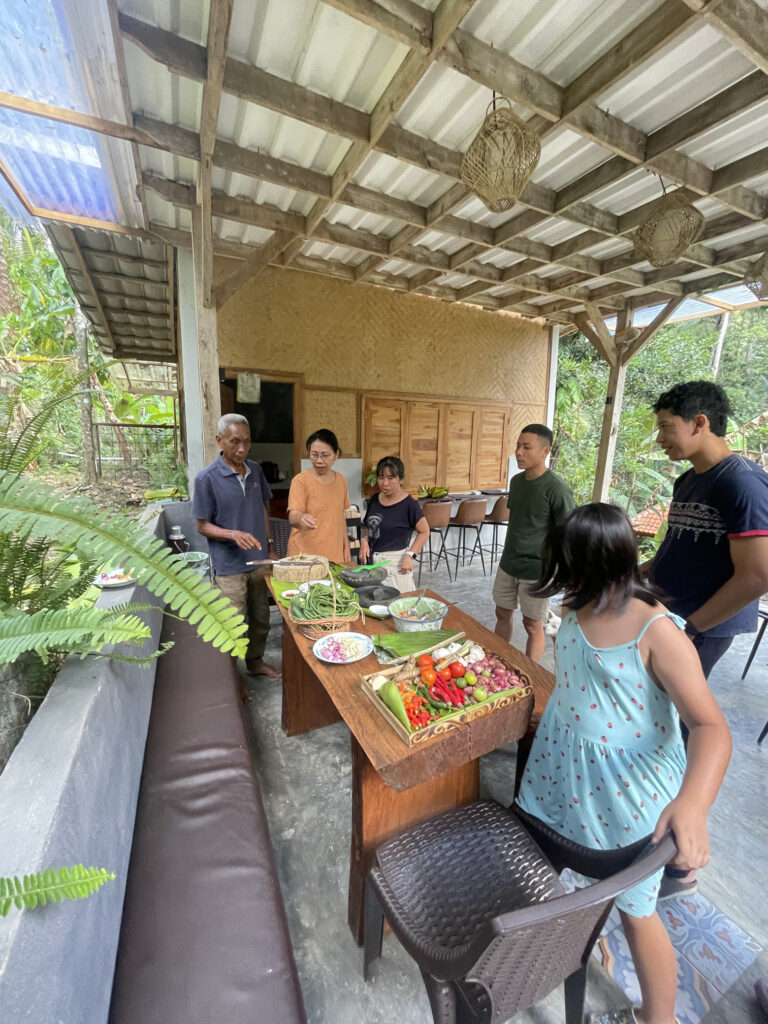
Because when I think about my experience in Bebanden, I increasingly see that these are exactly the kinds of moments I would like to create through C.U.D. Experience.
It’s not simply about showing people beautiful places.
Bali has beautiful places.
Vietnam has beautiful places.
The world is full of beautiful places.
But you can take thousands of photographs of beautiful places…
and never truly meet a person.
And for me, the person is the most important part.
Their story.
Their culture.
Their way of seeing the world.
Their traditions.
Their everyday life.
Their spirituality.
Their laughter.
Their questions.
Their differences.
Different Backgrounds. One Heart.
We may come from different countries.
Speak different languages.
Grow up in different cultures.
Have different religions.
Different experiences.
Different opinions.
Different stories.
And yet…
when we sit together at the same table,
talk,
laugh,
share food,
tell each other about our lives,
we suddenly discover that beneath all those differences…
we are remarkably similar.
We all want to be loved.
We all want to be seen.
We are all searching for something.
We are all afraid of something.
We all have a story.
Different Backgrounds. One Heart.
For me, this is more than a slogan.
It is a way of looking at people.
What If We Experience Something Like This Together?
And this is why I want to ask you something.
After this experience in Bali, I started thinking:
What if something like this became part of C.U.D. Experience Bali?
Not as an attraction.
Not as a “tour.”
Not as another item on a schedule.
But as a genuine encounter with Balinese tradition.
With a person.
With culture.
With spirituality.
With the opportunity to stop and see yourself from another perspective.
Just as I did in Bebanden.
If you would ever like to experience something similar during a C.U.D. Experience Bali…
let me know in the comments.
I’d genuinely like to know whether this kind of experience speaks to you.
Because C.U.D. is meant to be a space for experiencing, understanding, connecting and discovering people.
One Last Thought
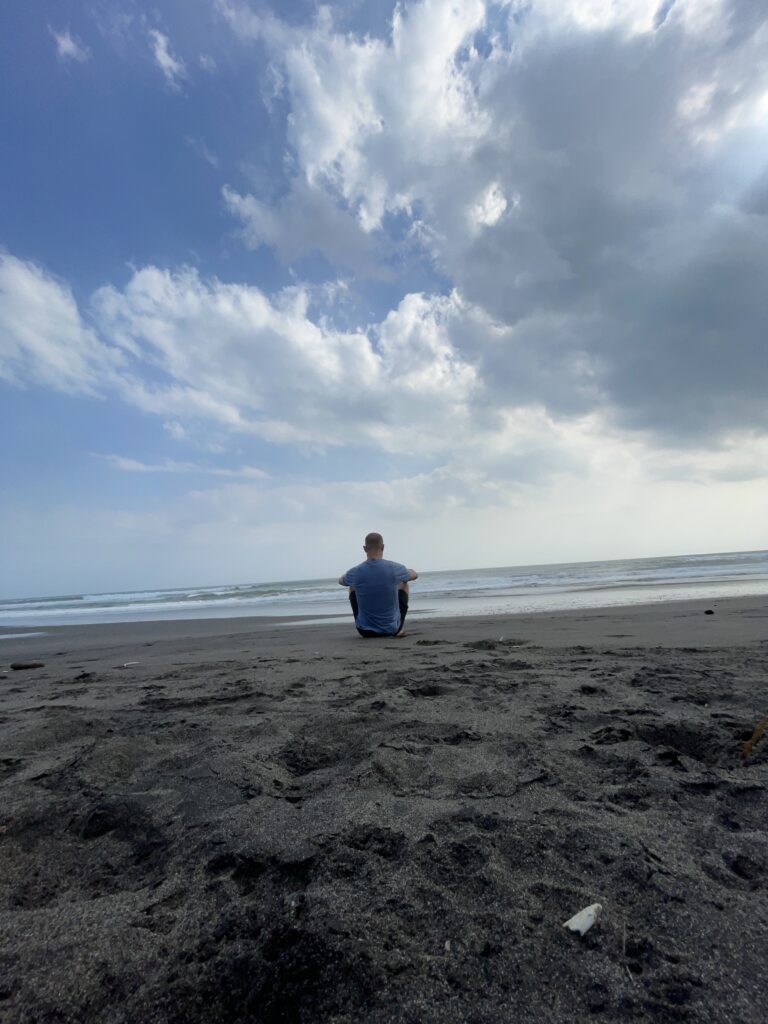
When I left Bebanden, I didn’t feel that I had received all the answers.
And maybe that’s exactly why the experience mattered.
I don’t need someone to tell me exactly who I am.
Sometimes I simply need to…
stop long enough to see it for myself.
Ngewacakan gave me certain words.
The purification ceremony created space to pause.
Pawukon offered another perspective on time.
Pertiwi reminded me of our relationship with nature.
And meeting someone from another culture reminded me once again that the world can be experienced not only through our eyes.
We can experience it through people.
And perhaps that’s why I increasingly believe that a journey doesn’t end when you return home.
If you truly experienced something…
you carry it with you.
And then you have a choice.
You can leave it as a memory.
Or you can create something from it.
A story.
A relationship.
A project.
Help.
Inspiration.
Something good.
Because maybe that’s what matters.
Not only:
how much we have seen.
But:
what we choose to do with what we have seen.
If this story resonated with you and you’d like to support me in creating more independent projects like this, you can help fuel the journey.
Support the journey → HERE THANK YOU.